



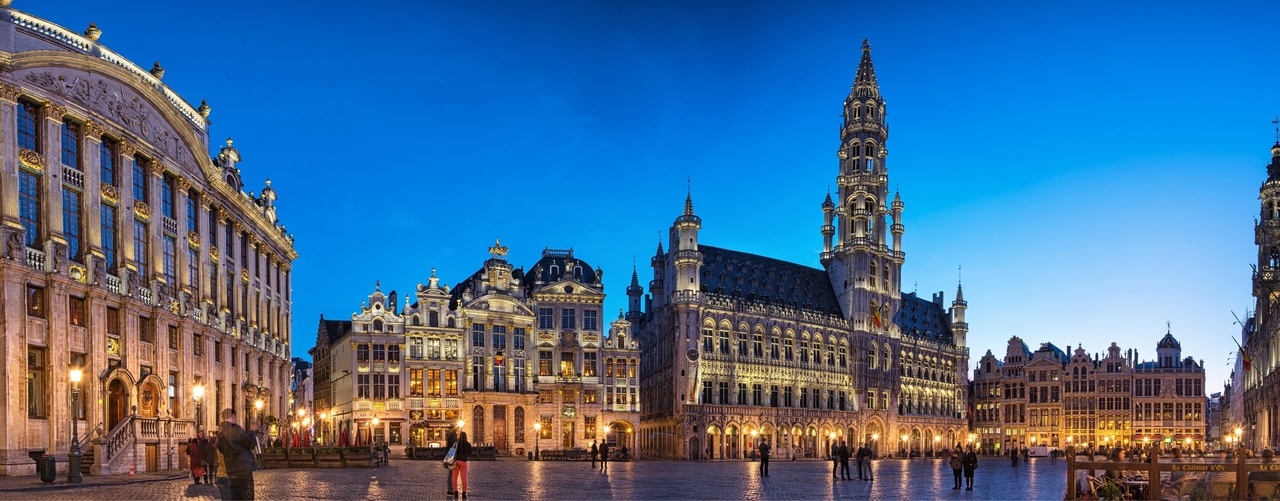
THE ART OF
BEING LOCAL
IN BELGIUM
Starting a Business in Belgium
Starting a business in Belgium puts international companies a few hundred metres from the EU institutions, with short routes into Germany, France and the Netherlands. InterGest Belgium has guided foreign companies through it from Brussels since 1989.
What you need to know about starting a business in Belgium
The company formation Belgium sees most often is the BV (besloten vennootschap), called SRL (société à responsabilité limitée) in French and a private limited company in English. Belgium abolished minimum capital in 2019. In its place the law asks for initial equity that fits the planned activity, which you derive in a financial plan covering at least two years. Formation runs through a notary and takes around a month, and costs come to roughly €4,000 plus VAT. The corporate income tax Belgium levies is 25 %, or 20 % on the first €100,000 of profit for small companies not majority-owned by another company. As a rule, you do not have to travel.
Interested in other countries where InterGest is present? You will find more on our overview page starting a business abroad, including a comparison table of the most common legal forms and regional overviews, for example on starting a business in Germany, in France, Hungary or the USA.
An overview of all InterGest services is on our services page.
Your contact for starting a business in Belgium
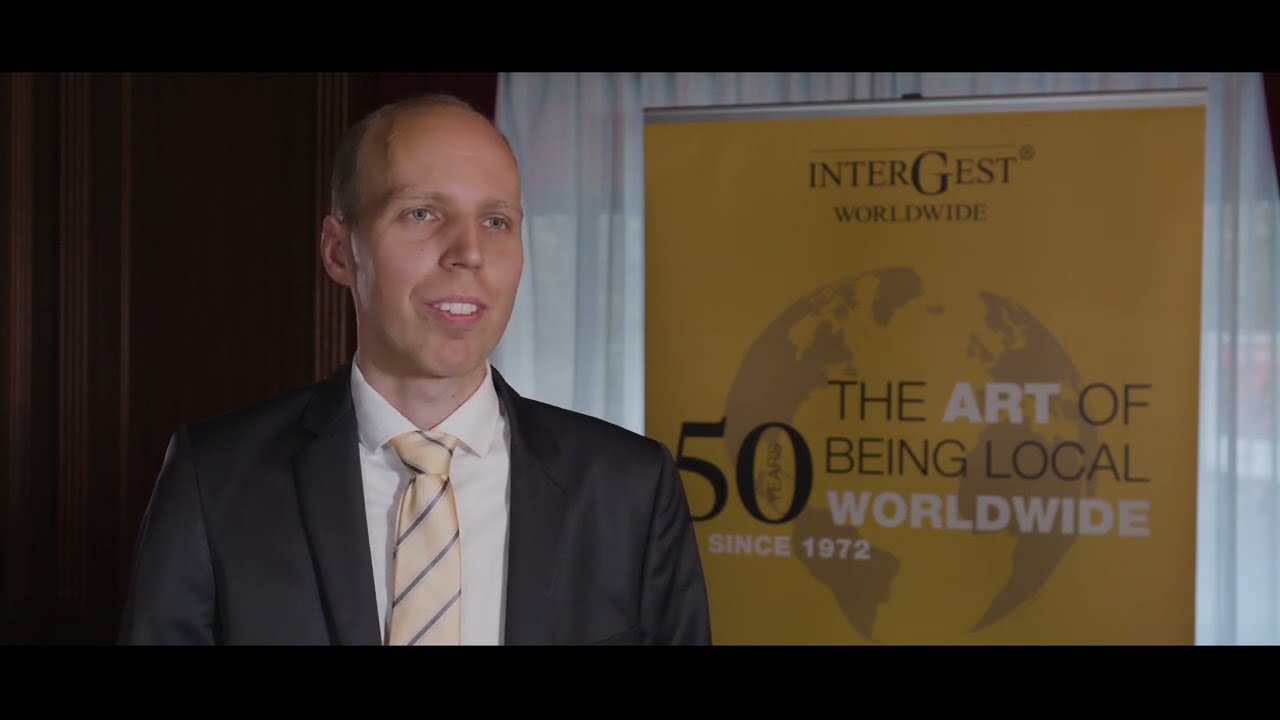
Mick Celis is a certified accountant and tax advisor (ITAA) and has worked for InterGest since 2008. His focus is corporate tax and group reporting. He advises foreign multinationals operating in Belgium and knows the points where Belgian rules and the expectations of a group head office pull apart.
InterGest Belgium was formed in 1989 to help foreign companies establish and develop their business in Belgium. Since then the Brussels team has looked after the subsidiaries of international groups, from the first financial plan to the ongoing reporting.


What are the advantages of starting a business in Belgium?
For most of our clients, reach is what tips the decision: from Belgium you serve Germany, France, the Netherlands and Luxembourg out of one structure, and many groups hold their European participations in a Belgian holding company. Five further points come on top, and not every one of them weighs the same for every project:
- Proximity to the EU: Brussels is home to the European Commission, the Council of the EU and NATO headquarters. Anyone working with EU institutions, applying for EU funding or tracking regulation early has the shortest routes here.
- Tax burden: Corporate income tax is 25 %, against roughly 30 % from corporate and trade tax combined in Germany. The corporate tax Belgium charges small companies is 20 % on the first €100,000 of profit, provided at least one director draws a minimum remuneration and no other company holds 50 % or more of the shares.
- Capital: Since the 2019 reform there is no minimum capital, while a German GmbH requires €25,000. What counts is initial equity that matches the planned activity, and a financial plan that demonstrates it.
- Test market: With Dutch-speaking and French-speaking customers in one country, Belgium lets you try out what is later meant to work in the Netherlands and in France.
- Talent: Multilingual staff are the norm rather than the exception. Many candidates bring Dutch, French and English in one person.
One caveat belongs with this. What Belgium makes easy on capital and tax rates, it takes back in employment law: wages are indexed automatically to price movements, union membership is high, and payroll is among the most demanding in Europe. Build that into the business plan and it holds no surprises later.
Which legal form is right for starting a business in Belgium?
Companies that set up a company in Belgium almost always end up with the BV. Three things make it fit for the subsidiary of a foreign group: it needs no statutory minimum capital, every BV Belgium registers can start with a single shareholder, and the parent may act as director itself in its capacity as a legal entity. Shareholders answer only up to their contribution.
Where a legal entity takes the director role, it has to nominate a fixed representative who carries out the task in person. No residence requirement applies to anyone involved. A Belgian notary has to execute the articles of association Belgium requires as a deed. Belgium company incorporation therefore always involves a notary: without that deed no company comes into existence, and without a financial plan the notary will not take the appointment.
For mid-sized companies the BV is therefore the usual way into the Belgian market. It is the Belgian counterpart of the German GmbH, without the GmbH’s minimum capital. Belgian company law also knows the public limited company (NV/SA) with €61,500 minimum capital for capital-intensive projects, the branch without separate legal personality, and several partnership forms.
| Legal form | Liability | Typical use | Suitability for foreign investors |
|---|---|---|---|
| BV / SRL (private limited company) | Limited to the company assets | Subsidiary, sales, holding | Very suitable, the standard case |
| NV / SA (public limited company) | Limited | Capital-intensive projects, €61,500 minimum capital | Only for larger structures |
| Branch | Parent company is directly liable | Presence without a separate entity | Only for special cases |
| Partnership (VOF/SNC, CommV/SComm) | Up to unlimited, depending on the form | Small local projects, joint ventures | Rarely chosen |
Advantage: A group that supplies Belgium through a BV appears to customers and public bodies as a Belgian contracting partner, with its own enterprise number and its own VAT number. The company hires staff, signs contracts and acquires property in its own name, while the parent keeps full control through the shareholders’ meeting.
Initial equity: Instead of minimum capital, the law asks for equity that fits the planned activity. You derive it in the financial plan, which the notary keeps on file. Some companies start with €1, others with €100,000. The cash flow projection for the first two to three years decides it, not a figure in a statute.
Founder liability: If the company goes bankrupt within three years of acquiring legal personality and the initial equity was manifestly insufficient at formation to carry the planned activity for at least two years, the founders are personally liable. So the financial plan is not a form to fill in. It is your liability shield.
Location and infrastructure in Belgium
Anyone weighing a company formation in Belgium against the Netherlands usually looks at tax and ports first. In Belgium, though, the location question also decides language: the region you choose determines which language your corporate documents and employment contracts have to be drawn up in. These criteria are the decisive ones:
- Language region: Dutch applies in Flanders, French in Wallonia, both in Brussels, and German in the nine municipalities of the German-speaking Community. What counts is where the operating site sits, not which language the management speaks.
- Registered office: Brussels is the administrative and holding location, Antwerp the centre for port logistics and chemicals. Which city fits depends on whether customers, authorities or goods flows come first.
- Logistics: The port of Antwerp-Bruges is one of the largest in Europe, and the rail and motorway networks rank among the densest on the continent. From Brussels, high-speed trains reach Paris, London, Amsterdam and Cologne in around two hours or less.
- Staff costs: Belgium has no statutory minimum wage. Collective agreements set the floor; the guaranteed average minimum monthly income has stood at €2,233.61 gross since July 2026, and sector minimums often sit above it.
- Incentives: The regions award investment incentives, not the federal state. Flanders, Wallonia and the Brussels-Capital Region each run their own schemes with their own conditions and deadlines.
The language question is often underestimated, yet it touches every document an employer has to produce. In Flanders the 1973 language decree prescribes Dutch for employment contracts, work rules, payslips and every communication to staff. A document in another language is void, the court establishes this of its own motion, and the employee may not suffer from it. On top comes a fine that is multiplied by the number of employees concerned. Since 2014 an employment contract may additionally be drawn up as a legally valid version in another EU language in cross-border cases; where the versions differ, the Dutch text prevails.
In Brussels the language follows the employee: French-speaking staff receive their documents in French, Dutch-speaking staff in Dutch, and notices to the whole workforce appear as two separate documents. French applies in Wallonia, German in the nine municipalities of the German-speaking Community. English job titles such as manager are fine as long as they do not get in the way of understanding. The articles and corporate documents also follow the language of the region where the registered office sits. Moving the seat across a language border therefore requires an amendment to the articles.
InterGest Belgium is itself based in Brussels and checks contracts and documents for the right language before anyone signs.


What steps does starting a business in Belgium involve?
Seven steps stand between the first decision and a registered Belgian BV:
- Draw up the financial plan: It covers at least two years and contains an opening balance sheet, projected balance sheets, a projected profit and loss account and an income and expenditure budget. It justifies the level of initial equity and stays with the notary.
- Draft the articles: Here you settle objects, shares, corporate bodies and registered office. The objects clause has to be complete, including activities you only plan to add later.
- Open the account for the equity: The cash contribution goes into an account in the name of the company in formation. Your bank issues a confirmation.
- Attend the notary appointment: The notary executes the articles as a deed, files them with the registry of the enterprise court and arranges publication in the Belgian Gazette. Legal personality arises with that filing, which also produces the enterprise number.
- Register the beneficial owners: UBO registration Belgium requires within 30 days of formation, supported by evidence such as the share register or a shareholder resolution, and confirmed every year afterwards.
- Affiliate for company contributions: The company joins a social insurance fund and pays the annual company contribution, due each year on 31 December.
- Activate the VAT number: The application runs electronically through the e604 service and has to be filed before the first taxable activity, at the earliest two days after registration.
Publication creates the company but does not yet make it operational. Next come the day-to-day bank account and, as soon as you employ staff, registration with the social security office, accident insurance and affiliation to an external prevention service. A power of attorney covers the formation itself. A Belgian business bank account is not compulsory, and a foreign account works too. We still recommend one, because payments run faster and some automatic payments require a Belgian account. Some banks now also identify customers remotely.
InterGest Belgium can take these steps off your hands or make them simpler, from the financial plan to the VAT number, and keeps an eye on the deadlines.
What does starting a business in Belgium cost and how long does it take?
Belgium company registration runs through a notary, not through an online portal, and that shapes both the price and the calendar. Allow around €4,000 plus VAT for the full package. That covers the notary fees, drafting and reviewing the articles, the financial plan, setting up the share register, activating the VAT number, affiliation to the social insurance fund and the registration itself. Publication in the Belgian Gazette costs €236.50 plus VAT for an electronic filing and €292.90 on paper. Where neither the bank nor the notary causes a delay, the company stands after roughly a month.
| Item | Duration |
|---|---|
| Initial call, structure and proposal | A few days |
| Preparing the financial plan and cash flow projection | 1 to 2 weeks |
| Drafting and agreeing the articles | A few days |
| Account for the equity and bank confirmation | Depends on the bank, some banks identify remotely |
| Notary appointment and deed | Subject to the notary’s availability |
| Filing, publication and enterprise number | Following the deed |
| UBO registration | Within 30 days of formation |
| Activating the VAT number | A few days after registration |
Ongoing taxes: Corporate income tax is 25 %. Small companies pay 20 % on the first €100,000 of profit, provided at least one director draws a remuneration of at least €51,000 a year. Companies of which 50 % or more of the shares are held by another company are excluded, so a subsidiary whose sole shareholder is the parent pays 25 %. The tax return falls due on the last day of the seventh month after the financial year end. Treating VAT in Belgium like VAT in Germany would be a mistake: the standard rate is 21 % rather than 19 %, with reduced rates of 12 % and 6 % and, exceptionally, 0 %. Up to €25,000 of annual turnover, the small business scheme applies. Since January 2026 companies have had to exchange domestic invoices between businesses as structured electronic files.
Withholding tax: Belgium levies 30 % withholding tax on dividends. For a parent company in the EU it falls away entirely where that parent holds at least 10 % of the capital and keeps the holding for an uninterrupted year. The double taxation treaty between Germany and Belgium of 1967, supplemented by the 2002 additional agreement, caps the rate at 15 %; in practice German parents rely on the full exemption.
Annual accounts: You file them with the Central Balance Sheet Office of the National Bank of Belgium, within 30 days of approval by the shareholders and at the latest seven months after the financial year end. The filing fee depends on the format of the accounts and is adjusted every year.
Company contribution: Every company pays an annual contribution to a social insurance fund, due on 31 December. The amount depends on the balance sheet total and rises with the index every year.
Note: What a company costs does not end at the formation. Closing a BV again calls for an external audit and a notary once more. If you only want to test the market, a branch is sometimes the better route.

Which documents do I need for starting a business in Belgium?
Not much, as it turns out. Work sits in the financial plan, not in the number of forms.
For the company:
- Company name, with two alternatives in reserve
- Articles of association under Belgian law, as a draft for the notary
- Financial plan covering at least two years
- Bank attestation confirming the equity transfer
- Overview of the beneficial owners for the UBO register
For shareholders and directors:
- Identity or passport copies of every shareholder and director
- Where a body corporate is a shareholder: a register extract and the ownership chain up to the ultimate beneficial owners
- Where a legal entity sits on the board: nomination of the fixed representative
- Power of attorney for the deed, if you are not travelling yourself
There is no certificate of incorporation Belgium issues. Proof that the company exists comes from the publication in the Belgian Gazette and from the business registration certificate Belgium provides as an extract carrying the ten-digit enterprise number. You will find answers to common questions in our FAQs.
Which legal aspects apply when starting a business in Belgium?
Starting a business in Belgium is governed by the Code of Companies and Associations Belgium adopted in 2019, known as WVV in Dutch and CSA in French. The CSA Belgium introduced that year abolished minimum capital for the BV and put initial equity and a financial plan in its place. That is the real difference from German or Austrian practice: no number in a statute caps the risk, your own projection does. The code also governs corporate bodies, liability, annual accounts and the language of company documents.
Registration runs through the Crossroads Bank for Enterprises, the Belgium business registry, called KBO in Dutch and BCE in French. Every company receives a ten-digit enterprise number there, and with the prefix BE that number becomes the VAT number once the Federal Public Service Finance activates it. Articles and amendments appear in the Belgian Gazette, annual accounts go to the National Bank. The register of certified accountants and tax advisors sits with the ITAA Belgium set up as their professional body, and a tax advisor Belgium recognises has to be listed there. Anyone employing staff registers with the social security office and reports every engagement through Dimona no later than the moment work starts.
These authorities and legal foundations accompany every company registration in Belgium:
| Legal basis / authority | Function |
|---|---|
| Code of Companies and Associations (WVV/CSA) | Governs formation, corporate bodies, initial equity, liability and document language since 2019. |
| Crossroads Bank for Enterprises (KBO/BCE) | Issues the ten-digit enterprise number and keeps the master data of every company. |
| Belgian Gazette | Publishes the articles and any amendments; electronic incorporation €236.50 plus VAT. |
| National Bank of Belgium, Central Balance Sheet Office | Receives the annual accounts, deadline seven months after the financial year end. |
| Federal Public Service Finance | Activates the VAT number and levies corporate income tax and VAT. |
| Social security office (ONSS/RSZ) | Receives the employer registration and collects social security contributions. |
| ITAA | Keeps the register of certified accountants and tax advisors. |
| UBO register at the FPS Finance | Records the beneficial owners, deadline 30 days after formation. |
Accounting: Belgian companies report under BE GAAP, the accounting Belgium requires even where the group reports under IFRS. Anyone mapping the Belgian books to German HGB delivers the wrong figures in an inspection. The work therefore belongs with an accountant Belgium has certified through the ITAA.
Statutory auditor: A company needs an auditor only once it exceeds more than one of three criteria in two consecutive financial years: 50 employees on annual average, €11,250,000 of turnover and €6,000,000 of total assets. Most subsidiaries stay below that. Where the company belongs to a group that has to consolidate, however, the exemption does not apply.
Permits: There is no general trading permit. Only regulated activities need a business license Belgium requires, and the regions are the competent authority for those.
What financing options are there for starting a business in Belgium?
Since minimum capital disappeared, financing sits at the start of the project rather than at the end for anyone who wants to start a company in Belgium. The financial plan has to show that the money lasts at least two years. It usually comes from several sources:
- Equity from the home country: The standard route. How much that is follows from your own projection, not from a figure in a statute. Set it too low and it turns into a liability risk for the founders.
- Shareholder loans: Common and permitted. Document the contract and market-rate interest. A loan does not count as equity, though, and does not improve the founders’ liability position.
- Bank loans: Belgian banks look closely at new companies with foreign owners and ask for the financial plan. Thin capitalisation also weighs on the credit rating.
- Regional grant schemes: Flanders, Wallonia and the Brussels-Capital Region award grants and equity separately, each with its own conditions, deadlines and contacts.
- Venture capital: Venture capital and business angels exist in Belgium, but for the classic subsidiary of a mid-sized company they rarely play a role.
Which mix fits depends on the sector, the capital requirement and the pace; usually it is equity plus a shareholder loan. InterGest Belgium reviews the structure as a whole and makes sure the financial plan still holds if revenue arrives later than planned.
Initial equity set too low
With no minimum capital to meet, it is tempting to start with too little. The consequences surface later: tight liquidity, a weak rating with banks and suppliers and, in an insolvency, a discussion about the personal liability of the founders.
We work the financial plan through so that it carries two years, and we document the assumptions so they can be followed.
Objects clause drawn too narrowly
What the articles do not cover, the tax authority can refuse to accept as a business expense. Adding an activity later means amending the articles before a notary, and the publication alone costs €171.70 plus VAT.
We word the objects clause so that it covers your business today and the business you are planning.
Employment and payroll underestimated
Underestimating Belgium on payroll is one of the most expensive mistakes at the start. Employer contributions of roughly 25 %, automatic wage indexation, sector-level collective agreements and the Dimona declaration due at the moment work starts are not a side task. Mistakes lead to substantial fines and cost you the benefit schemes you set up.
InterGest takes payroll over from the first hire and files on time.
FREE BOOK BY PETER ANTERIST
The 11 most expensive mistakes when starting a business abroad
Peter Anterist, CEO of InterGest Worldwide GmbH, has distilled the experience of more than 50 years of international company formation practice and projects in 50+ countries into a book: Fail in Foreign Trade. 11 typical pitfalls when starting a business abroad, from bogus self-employment and transfer pricing to compliance, and how international companies avoid them.


What InterGest in Belgium handles for you
Short answer: InterGest Belgium guides foreign companies from the formation through accounting, payroll and tax to the reporting for headquarters. From Brussels, the team works in Dutch, French, German and English.
Under the responsibility of Mick Celis, InterGest Belgium connects the practice of Belgian notaries, banks and authorities with what an international parent company expects in reports and standards.
- Formation: Financial plan, articles, notary appointment, UBO registration and VAT number. We prepare the documents and coordinate the notary and the bank.
- Advice: Legal form, structure and location, worked out on your actual project rather than in theory.
- Accounting: Day-to-day books and annual accounts under BE GAAP, prepared for the reporting of headquarters. We handle the filing with the National Bank.
- Tax: Corporate income tax, VAT returns and, for goods moving inside the EU, the Intrastat declaration to the National Bank.
- Payroll and HR: We provide the payroll services Belgium requires of every employer, from the Dimona declaration and monthly payslips to the quarterly DmfA return, along with the day-to-day HR Belgium expects and employment contracts in the language of the right region. On request we also take on the recruitment Belgium makes slow going with its tight labour market.
- Controlling: Monthly consolidation and cross-border reporting, on request in the logic of your group standard.
- Administration: Invoicing, payment monitoring, import and export administration and support in building up your sales structures.
One dedicated contact steers all of this, instead of sending you back and forth between notary, bank and social insurance fund. Our page with all InterGest services gives you an overview of our worldwide range.
Ready for your market entry in Belgium?
When will you start?
How to register a company in Belgium from abroad?
Entirely remotely. The initial call, the financial plan, the articles and the deed before the notary can all run on a power of attorney, and InterGest Belgium handles the registration for you.
For the business bank account it depends on the bank: some require identification in person, others identify remotely. A Belgian account is not compulsory, but we recommend one for faster payments.
What is a BV and how much capital do I need?
The BV is the Belgian private limited company, and there has been no statutory minimum capital since 2019. Initial equity takes its place: an amount that matches the planned activity and that you derive in the financial plan.
That is why the range is so wide. Some companies start with €1, others with €100,000. Anyone looking to set up a company in Belgium should size the figure against the costs of the first two years rather than against a statute. Set too low, it exposes the founders personally if the company fails.
What corporate income tax does Belgium charge?
25 % as the standard rate. Small companies pay 20 % on the first €100,000 of profit, provided at least one director draws a minimum remuneration.
That minimum remuneration is €51,000 a year, and the requirement does not apply during the first four tax periods after formation. Companies of which 50 % or more of the shares are held by another company are excluded, so a subsidiary whose sole shareholder is the parent pays 25 %. The return falls due on the last day of the seventh month after the financial year end.
How to apply for a Belgian VAT number as a foreign company?
If your company is not yet registered in Belgium, InterGest Belgium handles the company registration and the VAT registration together. Both numbers are then activated at the same time.
Belgium charges a standard VAT rate of 21 %, with reduced rates of 12 % and 6 % and, exceptionally, 0 %. Foreign companies identified for VAT in Belgium are not subject to the domestic electronic invoicing obligation.
What does company formation in Belgium cost and how long does it take?
Around €4,000 plus VAT, and roughly a month. The package covers notary fees, the articles, the financial plan, the share register, the VAT number, affiliation to the social insurance fund and the registration.
Publication in the Belgian Gazette comes on top: €236.50 plus VAT for an electronic filing, €292.90 on paper. In practice the account opening and the notary’s diary set the timeline.
Is there a company register in Belgium?
Yes. The Belgium commercial register is the Crossroads Bank for Enterprises, KBO in Dutch and BCE in French. Every company appears in the KBO Belgium keeps, under a ten-digit enterprise number, and third parties can look up the key data.
There is no certificate of incorporation. Proof comes from the publication in the Belgian Gazette and from the register extract. Annual accounts sit separately, with the National Bank of Belgium.
Can I register a Belgian company without visiting Belgium?
Yes, as a rule. Formation itself runs on a power of attorney, and the notary executes the deed without you being there.
For the business bank account Belgium sets no requirement to use a local bank, and a foreign account works too. We still recommend a Belgian one, because payments run faster and some automatic payments require it. Some banks identify customers remotely, others ask for an appointment in person.
What documents are required to register a private limited company in Belgium?
Five things: identity documents, the financial plan, the articles, a bank attestation and the UBO overview. The financial plan covering at least two years is the only one that calls for real preparation.
Where a legal entity stands behind the company, a register extract and the ownership chain up to the beneficial owners come on top. Where a legal entity acts as director, it has to nominate a fixed representative. For a Belgian business bank account the bank identifies you, in person or remotely depending on the bank, and the UBO entry follows within 30 days of formation.
Which language do the articles and employment contracts have to be in?
The region your operating site sits in decides. Dutch in Flanders, French in Wallonia, Dutch or French in Brussels, and German in the nine municipalities of the German-speaking Community.
Flanders is the strictest: an employment contract in the wrong language is void there, and a fine can follow. The special rules for Brussels and for cross-border contracts are in the location section.
What are the ongoing obligations of a Belgian BV, and does it need an auditor?
Bookkeeping under BE GAAP, annual accounts, the tax return, VAT returns, the yearly UBO confirmation and the annual company contribution. Accounts go to the National Bank of Belgium within 30 days of approval and at the latest seven months after the financial year end.
An auditor becomes necessary only once the company exceeds more than one of three criteria in two consecutive years: 50 employees, €11,250,000 of turnover, €6,000,000 of total assets. As soon as you employ staff, the Dimona declaration, the quarterly DmfA return and accident insurance come on top. An accountant in Belgium has to be registered with the ITAA, and all of this routine sits with us.
Why should I choose InterGest for starting a business in Belgium?
Because the support does not end with the registration. InterGest Belgium guides you from the formation through accounting, tax, payroll and payments to the reporting for headquarters, with one dedicated contact instead of many interfaces.
On the ground, Mick Celis, a certified accountant and tax advisor (ITAA), carries the technical responsibility. The team works in Dutch, French, German and English, and the Brussels office has been in place since 1989.
Add to that the network: InterGest has been active in over 50 countries since 1972. Whoever starts in Belgium can later use the same proven structure elsewhere, for example in Germany, France or Hungary. See the full range under all InterGest services.