

THE ART OF BEING LOCAL
IN KOREA
COMPANY FORMATION IN KOREA
The Republic of Korea also known as South Korea (but herein later on referred to as Korea), with a population of 52.3 million people and a land area of 100,210 square kilometers, is one of Asia’s leading industrialized nations. With a GDP per capita of USD 37,672, the country is considered highly developed economically. Particularly noteworthy is its strong export orientation: more than 35% of the GDP comes from exports, reflecting a high dependence on global trade.
The country’s history has been marked by dramatic upheavals: from 1910 to 1945, Korea was under Japanese colonial rule, followed by the devastating Korean War from 1950 to 1953. In the following decades, the country was shaped by authoritarian governments (1961–1987). The Gwangju Massacre in 1980 became a symbol of democratic resistance but it wasn’t until the Seoul Olympics in 1988 that Korea increasingly emerged on the global stage as a democratic and modern nation.
Today, Korea is globally competitive in numerous B2B sectors. The country is especially strong in technology, semiconductors, the automotive industry, batteries, chemicals, steel, and shipbuilding, as well as in fast-growing sectors such as cosmetics, and food.
InterGest Korea is a leading provider of comprehensive accounting, tax and IT solutions in Korea. We serve companies of all sizes by providing operational support through an outsourcing business model. As no two companies are identical, we will provide a customized solution to meet your requirements.
Christoph Heider, Managing Director of InterGest Korea, is a seasoned business leader with extensive experience in Korea, Japan, and Germany. He is Founder and CEO of 10TEN a small consulting company providing advice to foreign and Korean companies operating in or with Korea. From 2013 to 2023, he was President of the European Chamber of Commerce in Korea (ECCK), where he significantly strengthened its role in policy advocacy. Previously, he held senior roles at Bayer, including CFO of Bayer Korea. Christoph holds a Master’s in Business Administration and studied Japanese language and culture in Germany and Japan. He is a founding board member of Munich-based Heider-Kober Foundation. In 2016, he was awarded Honorary Citizenship of Seoul.
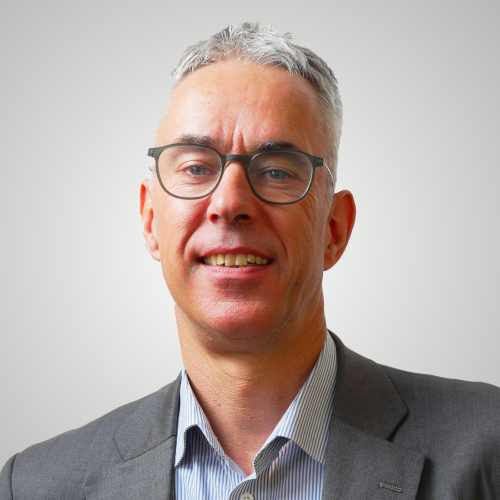
Etienne Linck is Director of InterGest Korea, in charge of delivering IT Services for InterGest Korea clients. He also is the General Manager of IT-Concept, an IT services company based in Seoul that specializes in information systems and infrastructure management. With a background from the European Institute of Technology (EPITECH) Etienne leads a team delivering high-trust IT solutions to global clients. In 2025, IT-Concept was honored as “Best French Entrepreneur in Korea” by the French Korean Chamber of Commerce and Industry (FKCCI), recognizing the team's dedication and excellence.

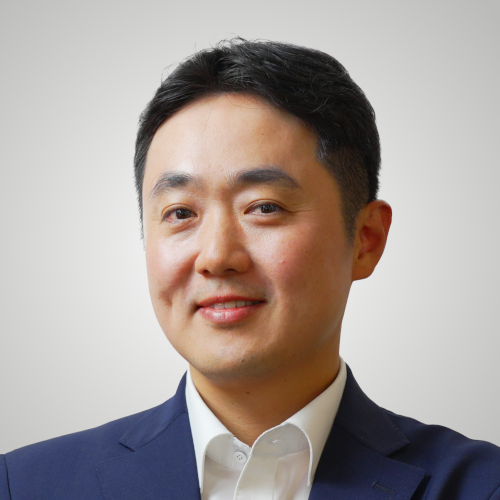
Woo Jeong Kim serves as Advisor to InterGest Korea in terms of Accounting and Tax services. He is a Certified Public Accountant (CPA) with more than a decade of experience working with multi-national companies in a wide range of industries. Woo Jeong’s experience includes working at Deloitte Anjin LLC and Korean Air. Besides being in charge of Finance & Accounting services at InterGest Korea, he is also Partner at WITH Accounting.

What legal structures are available to foreign companies in South Korea?
in South Korea. The most common options are:
- Chusik Hoesa (public limited company): By far the most common legal form for foreign investors. It is an independent legal entity with an unlimited number of shareholders. The minimum investment amount is 100 million KRW (approx. 70,000 EUR). Ordinary and preference shares may be issued.
- Yuhan Hoesa (limited liability company): Comparable to the German GmbH. Its governing bodies are the managing directors, the board of directors and the general meeting of shareholders. Unlike the Chusik Hoesa, the Yuhan Hoesa is not permitted to issue bonds. The minimum investment amount is also 100 million KRW.
- Branch: A branch is not a separate legal entity but an extension of the parent company. It may engage in profit-oriented activities and is treated as a permanent establishment for tax purposes. No minimum capital is required.
- Liaison Office: A liaison office serves exclusively for market research and establishing contacts. Profit-making activities are not permitted. Setting one up is straightforward and requires only a notification to the relevant foreign exchange bank.
What is the difference between a subsidiary, a branch and a liaison office in Korea?
The three forms differ fundamentally in terms of their legal autonomy, their tax treatment and the scope of business permitted:
Subsidiary (Chusik Hoesa or Yuhan Hoesa):
A subsidiary is an independent legal entity under Korean law and is classified as a domestic company. It may conduct business, enter into contracts and bring legal proceedings without restriction. The parent company’s liability is limited to its capital contribution. Establishment is governed by the Foreign Investment Promotion Act (FIPA) and requires a minimum investment of 100 million KRW.
Branch:
The branch is legally regarded as part of the foreign parent company. Although it has legal capacity and can sue and be sued in its own name, the parent company remains fully liable. For tax purposes, it is considered a permanent establishment, and its income is subject to Korean taxation. Capital and profit transfers require the approval of a foreign exchange bank.
Representative Office (Liaison Office):
The liaison office is the simplest form of presence in Korea. However, it may not engage in sales or profit-oriented activities. Only preparatory and support functions such as market research, marketing activities and R&D are permitted. As it does not generate taxable income, it applies for a tax exemption number instead of a regular tax number.
Is a joint venture in South Korea a sensible option for market entry?
A joint venture (JV) can be a strategically sound option for foreign companies, particularly where local market knowledge, existing distribution networks or sector-specific expertise are required. Under a JV, the foreign company establishes a new company together with a Korean partner based on one of the company forms provided for in the Commercial Act.
In most sectors, foreign companies may hold up to 100% of the shares. In certain sectors deemed critical to national security or the public interest – such as broadcasting, telecommunications, aviation and media – a local partner is, however, required by law or foreign ownership is restricted.
As the joint venture is not explicitly regulated as a legal form under Korean law, the contractual structure is of particular importance. The JV agreement should cover, amongst other things, the contribution of know-how, the procurement of raw materials, the import of machinery, engineering services, the choice of governing law and the resolution of legal disputes. Professional legal advice is strongly recommended here, as breaches of existing Korean law can render the contract null and void.
What is the minimum capital required to set up a company in South Korea?
The amount of minimum capital depends on the chosen company form:
- Subsidiary (Chusik Hoesa / Yuhan Hoesa): According to the Enforcement Rules of the Foreign Investment Promotion Act, a minimum investment of 100 million KRW is required. Depending on the exchange rate, this corresponds to approximately 70,000 EUR. The capital must be fully paid up by the time of registration at the latest.
- Branch office: There is no statutory minimum capital requirement for setting up a branch office. The funds can be raised flexibly in the form of capital, parent-subsidiary loans or working capital.
- Representative office: There is also no minimum capital requirement for a representative office.
How long does it take to set up a company in South Korea?
The time taken to set up a company varies depending on the complexity and completeness of the documents submitted:
- Standard procedure: Provided the documents are complete and the structure is straightforward, the time taken to set up a subsidiary is usually 14 to 21 working days.
- More complex structures: If sector-specific approvals, special licences or joint venture negotiations are required, the process can take one to two months.
- Representative office: Setting up a representative office is the quickest option, as it only requires notification to the foreign exchange bank and registration with the tax office.
Working with an experienced service provider such as InterGest Korea can significantly speed up the process, as several steps are handled in parallel – from registration and opening bank accounts to finding office premises.
What taxes do companies in South Korea have to pay?
The South Korean tax system comprises national and local taxes. The main types of tax for companies are:
Corporation tax:
Tax rates range from 10% to 25%, depending on the level of taxable income. In addition, there is a local income tax of 10% on top of the corporation tax, bringing the effective tax burden to between 11% and 27.5%. For an annual income of less than 200 million KRW (approx. 140,000 EUR), the tax rate is 10%.
Value Added Tax (VAT):
South Korea levies a standard VAT rate of 10% on most goods and services. Companies are required to register once they exceed a certain annual turnover. Exports from South Korea are exempt from VAT.
Withholding tax:
Dividends distributed to foreign shareholders are subject to a withholding tax of 22%. This rate may be reduced under double taxation agreements (DTAs) between South Korea and the investor’s home country.
Income tax for employees:
Personal tax rates range from 6% to 45%, depending on income level. In addition, there is a local income tax of 10%.
Is there a double taxation agreement between Germany and South Korea?
Yes, there is a double taxation agreement (DTA) between Germany and South Korea, which prevents double taxation in cross-border business activities. Among other things, the agreement regulates the taxation of corporate profits, dividends, interest and royalties.
The DTA allows Korean withholding taxes on dividends, interest and royalties to be reduced, making the repatriation of profits significantly more cost-effective for German companies. Austria and Switzerland have also each concluded their own double taxation agreements with South Korea.
Overall, South Korea has signed double taxation agreements with numerous countries worldwide, which facilitates international business transactions. However, professional tax advice is essential for the correct application of the DTA provisions, as the specific tax rates and credit arrangements vary depending on the agreement.
What tax incentives does South Korea offer to foreign investors?
South Korea offers an attractive package of tax incentives to encourage foreign investment. The regulations are based on the Foreign Investment Promotion Act (FIPA):
- Tax exemption for qualified technology investments: Companies investing in technologies that promote the growth of Korean industry can receive a 100 per cent deduction on the foreign investment ratio for five years, followed by a 50 per cent deduction for a further two years.
- Foreign Investment Zones: Similar tax incentives apply to foreign investors who meet certain requirements in designated investment zones.
- Land acquisition tax and property tax reductions: Under certain conditions, reductions in land acquisition tax and property tax may be applied for.
- Customs duty exemptions: Customs duty exemptions apply to eligible goods used in the supporting industrial services sector.
These incentives make South Korea particularly attractive to companies in the technology, semiconductor, automotive and chemical sectors. InterGest Korea would be happy to advise you on whether your investment project is eligible for tax incentives.
What steps are required to set up a company in South Korea?
Setting up a subsidiary (Chusik Hoesa) in South Korea involves the following key steps:
- Choose and check the company name: The desired company name must comply with Korean regulations. Availability is checked with the Korean Intellectual Property Office (KIPO).
- Draft and certify the Articles ofIncorporation: The Articles of Incorporation are drafted and certified by a public notary in South Korea. They contain details of the company’s objectives, shareholders and management structure.
- Submit a foreign investment notification: The foreign investment notification is submitted to the designated foreign exchange bank.
- Open a bank account and pay in capital: A Korean business account is opened and the minimum capital of 100 million KRW is paid in.
- Commercial registration: Registration takes place at the relevant District Court.
- Business registration: An application is made to the local tax office for a Business Registration Certificate, which is essential for legal business operations.
- Tax registration: The company is registered with the National Tax Service (NTS) and is issued with a business registration number for tax returns.
- Industry-specific licences: Depending on the business sector, additional licences or permits may be required.
InterGest Korea guides you through each of these steps and coordinates with local solicitors, tax advisers and authorities.
Can foreigners own a company in South Korea 100%?
Yes, in most economic sectors, foreign investors are permitted to own a company in South Korea 100%. South Korea pursues a fundamentally open investment policy and, according to the World Bank’s Ease of Doing Business Report, is one of the five most business-friendly countries in the world.
Restrictions on foreign ownership apply only in sectors considered critical to national security or the public interest. These include, amongst others:
- Broadcasting and media
- Telecommunications
- Aviation
- Energy supply (in part)
- Defence
In these sectors, an ownership cap may apply or a Korean partner may be required. For the vast majority of sectors – including technology, manufacturing, chemicals, automotive and services – there are no restrictions on foreign ownership.
What do I need to know about employment law in South Korea?
South Korean labour law is governed by the Labour Standards Act and other specific legislation. The following aspects are particularly relevant for foreign employers:
Social security:
Foreign employees aged between 18 and 60 who are resident in Korea are, in principle, compulsorily insured under the National Pension Service – in the same way as Korean nationals. Exceptions are made for nationals of countries that do not include Korean citizens in their pension schemes.
Statutory severance pay:
Severance pay is a payment ‘earned’ by employees and paid out by the employer when staff leave the company. In recent years, the severance pay system has already been replaced by occupational pensions in many companies, mainly through defined contribution schemes (but also defined benefit schemes). A reform is planned from 2026 onwards, which aims to gradually replace the current system with a unified pension system.
Working hours and occupational health and safety:
The Labour Standards Act regulates working hours and refers to the Safety and Health Act for matters of occupational safety. For certain activities that are harmful to health or dangerous, special working time restrictions apply, limiting working hours to a maximum of six hours per day and 34 hours per week.
Protection against dismissal:
South Korea has comparatively strict protection against unfair dismissal. InterGest Korea advises you on all employment law matters and, upon request, handles payroll accounting.
Do I need a visa to conduct business in South Korea?
German, Austrian and Swiss nationals may enter South Korea without a visa for up to 90 days. During this period, business trips, meetings, market analyses and trade fair visits are permitted.
However, a visa is required if:
- an employment relationship is established with a Korean company or its local subsidiary,
- payment is made by a company in South Korea,
- you commence permanent business activities on site,
- a secondment by the parent company is planned for a longer period.
Regulations under social security agreements also apply to seconded employees. There is a bilateral social security agreement between Germany and South Korea which, under certain conditions, allows German social security law to continue to apply for a limited period. InterGest Korea supports you with all visa and residence matters for your employees on the ground.