




THE ART OF
BEING LOCAL
IN INDIA
Starting a Business in India
India is the world’s most populous country and one of its fastest-growing major economies. InterGest India has supported foreign companies with business registration in India since 2007, from its office in Mumbai.
What you need to know about starting a business in India
Short answer: the most common vehicle for starting a business in India is the Private Limited Company (Pvt Ltd, the Indian limited liability company). It allows 100 % foreign ownership and suits a manufacturing plant as well as a sales office. You need at least two directors, one of them resident in India. The minimum capital is INR 100,000 (around €950); statutory fees depend on the authorised capital, for example a company with authorized capital of INR 1 million the statutory fees would about be INR 4,500, however would change with rapidly with increase in authorised capital. Plan around 3 months until the company is fully operational. Company incorporation in India runs through seven steps, from name reservation to the post-incorporation registrations. No personal appearance is required.
Interested in other countries where InterGest is present? You can find more about other countries on our overview page starting a business abroad. There, you will find a comparison table of the most common legal forms as well as regional overviews: for example, on starting a business in China, starting a business in Malta, starting a business in Mexico or starting a business in Hungary.
An overview of all InterGest services can be found on our services page.
Your contact for starting a business in India
Vinayak Hajare has been a Director of InterGest since 2007. He holds a bachelor’s degree in science and an MBA in finance. Over more than 43 years of working experience including 35 years as an investment banker, he has built deep experience in mergers and acquisitions; search for partners and advisory services for setting up joint ventures. He has also worked as an independent director on the board of a listed company for around 15 years. Prior to setting up InterGest he as worked with Lazard Freres in India, Credit Lyonnais (now Credit Agricole).
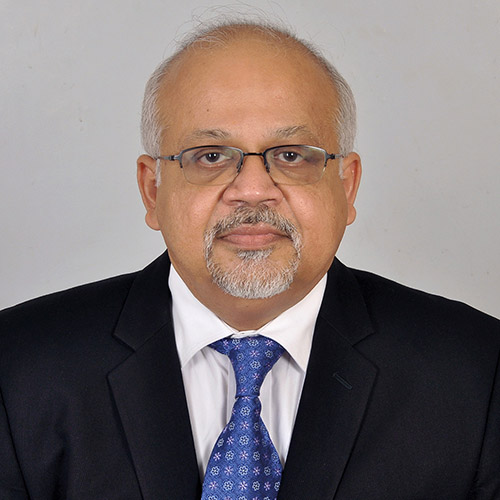
Rohan Hajare has worked with InterGest India for the past five years. He drives business development for both inbound and outbound InterGest services, and holds a management degree with a specialisation in finance. He also helps companies with joint ventures, alliances, divestments and the acquisition of brands and businesses.


What are the advantages of starting a business in India?
Starting a business in India brings clear benefits of doing business in India once you are on the ground:
- Growth potential: India is one of the fastest-growing economies in the world, which gives companies room to expand for years to come.
- Cost savings: labour and operating costs are comparatively low, so companies can cut costs while keeping the quality of their products and services. Interested in additional cost-efficient manufacturing locations? Discover our pages on starting a business in Mexico or starting a business in China.
- Low taxes: tax conditions are favourable with competitive rates. A double-taxation treaty between India and Germany in place in 1996.
- Trained personnel: India has a deep pool of professionals across information technology, engineering and medicine.
- Access to a large market: with more than one billion people, India is one of the largest markets in the world.
- Policy support: the Indian government actively backs new business with a range of incentives and support schemes.
- Favourable financing: companies can draw on bank loans and venture capital to fund their growth.
None of this makes entry simple. Bureaucracy, the tax system, hiring and cultural differences can each stall a project if they surface too late. InterGest India provides the local team that sets your company up properly and keeps the known hurdles from turning into problems.
Which legal form is right for starting a business in India?
For starting a business in India, you can choose between several company types, and the Private Limited Company fits most foreign investors. It is the Indian equivalent of a limited company: liability is capped, 100 % foreign ownership is allowed, and a subsidiary set up this way can run a manufacturing plant as readily as a sales office. You need at least two directors (two to fifteen are allowed), one of them resident in India. Shares cannot be traded publicly, but the company can own real estate and other assets in its own name.
Indian law also provides other forms. The Public Limited Company suits capital-market plans, the Limited Liability Partnership (LLP) suits service firms, and the one person company in India is reserved for single founders resident in the country. If you would rather not form a company at all, a foreign company can open a branch office in India; it has no separate legal personality, needs central-bank approval and stays limited in what it may do.
Good to know: most sectors are open to foreign investors through the automatic route, with no prior government approval. Only a few sectors require the approval route and official consent.
| Legal form | Minimum capital | Typical use | Suitability for foreign investors |
|---|---|---|---|
| Private Limited Company (Pvt Ltd) | INR 100,000 (around €950) | Subsidiary for manufacturing or sales | Recommended, 100 % foreign ownership possible |
| Public Limited Company (Ltd) | Higher, depends on the project | Capital market, large structures | Special cases only |
| Limited Liability Partnership (LLP) | No fixed minimum | Service firms, consultancies | Possible, with restrictions |
| Joint venture (a shared company with a local partner, usually set up as a Pvt Ltd) | No fixed minimum | Shared company, usually set up as a Pvt Ltd | Possible, partner choice is decisive |
| One Person Company | No fixed minimum | Single founders resident in India | Not suitable for foreign investors |
| Branch office | No registered capital | Extended arm of the parent company | Approval required, restricted scope |
Advantage: the Private Limited Company gives the parent full control and is quick to act. It can hire staff, sign contracts and acquire property without an Indian co-shareholder.
Disadvantage: it carries ongoing duties: annual filings with the registry, an audit, and a tax system that is hard to work through without local support.
Location and infrastructure in India
When starting a business in India, the address can matter more than the company type: pay levels, transport links and the local talent pool vary sharply from one state to the next. Keep these five criteria in view:
- Industry clusters: IT and software in Bangalore and Hyderabad, finance in Mumbai, automotive and machinery around Pune and Chennai, administration and services in the Delhi region.
- Transport links: ports, airports and highways decide how reliably goods and components move. Given the size of the country, logistics is a real factor and belongs in the location decision.
- Availability of skilled staff: the supply of English-speaking professionals is large but varies by region and industry. Keeping staff takes locally calibrated pay and leadership.
- Rent and operating costs: costs differ a lot between the metros and second-tier cities, and the office lease deposit belongs in the start-up budget from day one.
- Proximity to authorities and banks: registrations, bank meetings and audits move faster over short distances. For business registration in Mumbai that is a practical edge: registry, banks and our team sit in the same city.
InterGest India is based in Mumbai, in Govandi on the eastern side of the city, with easy access to the rest of Mumbai. Pune, one of India’s major industrial belts, is two hours away. From there the team advises on the right location for your business.


How company incorporation in India works
Registering a company in India runs through seven stages:
- Apply for the company name: the chosen name is checked and reserved with the Registrar of Companies (ROC, the registry under India’s corporate affairs ministry). This now runs electronically through the ministry’s central incorporation portal.
- File the incorporation application with the ROC: the file includes the Memorandum and the Articles of Association India expects (the company’s constitutional documents), the details of shareholders and authorised capital, and for every director a Director Identification Number (DIN, a personal ID number) plus the Digital Signature Certificate India requires for electronic filings. InterGest can prepare the applications and check the foreign documents in advance.
- Receive the Certificate of Incorporation: with this incorporation certificate and the Corporate Identification Number (CIN) it carries, the company is entered in the Indian company register and legally exists.
- Open the bank account: banks open the business account once the company is formed and the KYC documents (the identity papers of shareholders and directors) are submitted.
- Pay in the capital: the subscribed capital flows to the new account. Note that the legal minimum of INR 100,000 is rarely enough in practice. Budget four to six months of operating costs plus the office lease deposit, or the company starts underfunded.
- File for Commencement of Business: once the capital is paid in, the declaration of Commencement of Business is filed with the ROC. Only then may the company trade.
- Complete the remaining registrations: depending on the activity, these include the tax registrations (PAN for direct tax, GST for indirect tax) and, for cross-border trade, the Import Export Code. InterGest can handle these filings and knows the order in which they move fastest.
Altogether, plan around 3 months until the company is fully operational. In rare cases a post-incorporation registration takes longer, which applies to any structure and is easy to cushion with clean preparation.
How much does starting a business in India cost and how long does it take?
Starting a business in India is inexpensive by international standards, and the statutory fees depend on the authorised capital. For example, a company with INR 1 million in equity pays about INR 4,500 in statutory fees, roughly €45. Pvt ltd company registration fees in Mumbai match the rest of the country, because the fee schedule is national.
| Item | Duration | Cost |
|---|---|---|
| Document preparation, DIN and DSC | 1–2 weeks | Approx. INR 3,000–6,000 (~€30–55; DIN/DSC per director) |
| Company registration (SPICe+) and Certificate of Incorporation | 2–3 weeks | Government fees approx. INR 4,500 (~€40; at INR 1m capital ≈ €9,000) |
| PAN, TAN and GST registration | In parallel | No separate fee |
| Bank account opening | 2–4 weeks | Fees INR 100.000 (~1.000€) |
| Advice and support | Throughout the project | Approx. €4,500–6,000 (flat fee) |
| Typical total | ~ 3 months to operational | Approx. €2,000–3,000 plus minimum capital INR 100,000 (~€900) |
Capital: the legal minimum is INR 100,000. More important is the practical figure: bring in enough to carry four to six months of operating costs plus the office deposit.
Corporate taxes in India: the corporate tax rate is effectively around 25 % under the optional 22 % regime plus surcharges. Indirect tax runs through GST (Goods and Services Tax). Since the September 2025 reform there are two main slabs: 5 % on essential goods and services and 18 % on most other supplies, plus 40 % on luxury and sin goods. Dividends paid abroad carry a 20 % withholding tax, reduced to 10 % under the double-taxation agreement with Germany.


What documents do I need for starting a business in India?
Starting a business in India comes with paperwork: the registry asks for the documents below before it registers your company.
For the company:
- Application for the name of the company
- Proposed authorised share capital
- Names of the shareholders and pattern of shareholding
- Brief description of the activities of the proposed company
- Registered office address and contact details
- Memorandum and Articles of Association (the company's constitutional documents)
For directors and subscribers:
- Application for the Director Identification Number (DIN) and the Digital Signature Certificate (DSC, the personal e-signature each director uses for electronic filings) for every director
- Consent of all directors (Form DIR-2)
- Declaration or affidavit of all directors and subscribers
- Self-attested copy of the PAN (the Indian tax ID) and address proof of all directors and subscribers
- Photographs of all directors and subscribers
If a foreign company acts as subscriber (e.g. when you set up a subsidiary):
- Certificate of incorporation of the parent company, duly apostilled and notarised
- Proof of the registered office address, duly apostilled and notarised
- Certified copy of the board resolution
All documents executed outside India, and all identity and address proofs, must be duly apostilled and/or notarised. InterGest can coordinate procurement, certification and filing, in the correct order, because that is exactly where many first attempts fail. You will find further guidance in our FAQs.
What legal aspects apply when starting a business in India?
The legal side of starting a business in India is more manageable than the reputation of Indian bureaucracy suggests. The key is knowing who is responsible for what.
The foundation is the Companies Act 2013, India’s companies act. It governs formation, governing bodies, capital and the ongoing duties of all corporations. The Ministry of Corporate Affairs (MCA) and its regional Registrars of Companies administer it. Incorporation runs electronically through the ministry’s central portal, which bundles name reservation, the incorporation application and several tax registrations into one procedure.
Foreign investment falls under the Foreign Exchange Management Act (FEMA), supervised by the Reserve Bank of India. Most sectors are open through the automatic route, and the capital contribution is reported to the central bank. Ongoing company taxation in India sits with the Income Tax Department and the GST system.
These authorities and laws accompany every company formation india projects go through:
| Legal basis / authority | Function |
|---|---|
| Companies Act 2013 | Governs formation, governing bodies, capital and ongoing obligations. The basis of every company registration in India. |
| Ministry of Corporate Affairs (MCA) | Corporate affairs ministry, operates the central incorporation portal (mca.gov.in). |
| Registrar of Companies (ROC) | Maintains the company register and issues the Certificate of Incorporation India grants with the CIN. |
| Reserve Bank of India / FEMA | Foreign exchange law, reporting of foreign direct investment, approval of branch offices. |
| Income Tax Department | Corporate income tax, issues the PAN (the Indian tax ID). |
| GST authorities | Goods and Services Tax (the nationwide indirect tax on goods and services): registration and collection; 5 % and 18 % since September 2025. |
| Directorate General of Foreign Trade | Issues the Import Export Code for cross-border trade. |
The central portal of the corporate affairs ministry is at mca.gov.in.
What financing options are there for starting a business in India?
Starting a business in India can draw on several funding routes:
- Equity from the home country: the standard route. The contribution flows in through the automatic route and is reported to the Reserve Bank of India. Keep a cushion for four to six months of operating costs plus the office lease deposit.
- Shareholder loans: loans from the parent are possible but fall under the rules for external borrowings in Indian foreign-exchange law. The contract and reporting must be correct, or interest and principal get stuck on the way back.
- Local bank loans: Indian banks can finance companies, but in practice they ask for collateral and a track record. In the start-up phase, equity is the more reliable route.
- Venture capital: venture capital is well established in India, above all in technology and consumer sectors. For the classic mid-sized subsidiary it rarely plays a role.
- Incentive schemes: the government offers incentives and support, for instance through the Startup India programme and sector-specific production incentives. Conditions are tied to evidence and change regularly.
The right blend depends on your sector, how much capital you need and how fast you want to move; for most subsidiaries it comes down to equity plus a shareholder loan. InterGest India reviews the reporting duties and any eligibility and keeps the capital structure clear, so profits can be repatriated later without friction.
Not bringing in adequate capital
The legal minimum of INR 100,000 tempts founders to budget tightly. A few weeks later the money for salaries, rent and start-up costs runs out, and every top-up takes time because it passes through the reporting channels again. As a rule of thumb, plan four to six months of operating costs plus the office deposit from the start.
We help you derive the capital requirement from the business plan with the parent company, before the articles are drafted.
Selecting the wrong location
Choosing the location by the first available office space costs twice over later: long supply routes, a thin talent pool or rents that do not fit the business model. India’s regions differ more than they look from the outside.
We back the location decision with data: clusters, logistics, staff availability and costs side by side.
Not being compliant
After incorporation, the obligations only begin: the Commencement of Business filing, annual returns to the Registrar of Companies, tax returns and GST filings. Missing deadlines risks fines and, in the worst case, the disqualification of directors.
We can take over the entire compliance calendar: we monitor the deadlines, submit the filings and keep head office informed.
FREE BOOK BY PETER ANTERIST
The 11 most expensive mistakes when starting a business abroad
Peter Anterist, CEO of InterGest Worldwide GmbH, has distilled the experience of more than 50 years of international company formation practice and projects in 50+ countries into a book: Fail in Foreign Trade. 11 typical pitfalls when starting a business abroad, from bogus self-employment and transfer pricing to compliance, and how international companies avoid them.


What services does InterGest provide for yourmarket entry in India?
Short answer: InterGest India has looked after foreign subsidiaries since 2007, covering company formation, fiduciary administration, accounting, HR and reporting in India. The team is based in Mumbai, works with clients in English and hands head office its figures in the format it already uses across Europe.
InterGest India is led by Vinayak Hajare, Director since 2007. He holds an MBA in finance, brings over 27 years of experience, 18 of them as an investment banker focused on mergers and acquisitions, and serves as an independent director on several boards listed on Indian stock exchanges. In day-to-day business he is supported by Rohan Hajare, who leads business development.
For foreign parents, the team removes the biggest hurdle in company formation in India: the gap between India’s administrative and banking world and the reporting head office knows from Europe. The same logic with which the network also supports European projects such as starting a business in France or starting a business in Hungary.
- Business establishment: we provide the company formation services india entry projects need: name reservation, the incorporation filing with DIN and digital signature, apostille coordination for the foreign documents and the Commencement of Business filing.
- Strategic consulting: before any application is filed, we work out with you whether and how the move pays off. India market entry consulting at InterGest means thinking through location, legal form and sales channel together.
- Accounting: our Mumbai team keeps your subsidiary’s books on the ground, so you never send documents to India or touch the Indian ledger yourself. Our india bookkeeping services cover monthly closings, tax reports and the annual accounts, and we set up the management reporting for head office. For companies already operating in India, outsourcing accounting to india keeps one more process in the same hands.
- Tax and legal support: we answer the recurring questions on corporate income tax, GST and dividend withholding tax and keep tax compliance in india on track through the year. A personal tax advisor in india works hand in hand with your bookkeeping team, so tax questions and live figures come from one source; for contract reviews we bring in partner law firms.
- Payroll & human resources: we run your employees’ payroll under Indian law and register the social contributions. Our payroll services in india work as full payroll outsourcing India: monthly payslips, statutory filings and year-end reconciliation in one mandate. Hiring and team management are part of the same mandate, with no per-placement fees from outside recruitment agencies in india.
- Controlling and reporting: so head office always knows where its subsidiary stands, we consolidate the figures monthly and deliver cross-border reporting, on request in the logic of your group standard.
- Debtor management: we issue your invoices, monitor incoming payments and chase overdue accounts, out of court first and with local lawyers where needed.
- Administration: on request we administer your company on a fiduciary basis. We run the bank accounts, manage cash and credit, and review contracts before you sign, with a personal project manager india-side for larger projects.
For the worldwide picture, see the overview of all InterGest services. You have one contact for everything.
Ready for your market entry in India?
When do you start?
Do I need to be physically present in India to start a business?
No. The entire procedure runs electronically through the corporate affairs ministry's portal; no personal appearance in India is required. Applications are signed with each director's Digital Signature Certificate (DSC).
One requirement remains, though: at least one of the directors must be resident in India. If you lack this resident director, we will find a solution together.
InterGest can manage the whole procedure remotely for you, from name reservation to the downstream registrations. The details are clarified in a consultation.
How much does it cost to set up a business in India?
The statutory fees depend on the authorised capital. Example: a company with an equity capital of INR 1 million pays around INR 4,500 in fees, roughly €45. That makes India one of the cheapest places to incorporate anywhere.
On top comes the capital itself: at least INR 100,000 (around €950), in practice better the operating costs of four to six months plus the office lease deposit. The money is not lost, it works as operating capital inside the company.
Certifications, apostilles and advice come on top depending on your constellation. An overview is in the Costs & duration section above.
How to register a private limited company in India?
The Private Limited Company is registered electronically through the corporate affairs ministry's portal: name reservation, constitutional documents, details of shareholders and capital, plus the DIN (Director Identification Number, each director's personal ID) and the digital signature for every director go to the Registrar of Companies in one bundle. That is how to set up a private limited company in India in practice.
Requirements: at least two directors, one of them resident in India, and at least INR 100,000 in capital. Foreign shareholders may hold 100 %; their documents must be notarised and apostilled.
If you lack the resident director, talk to us. InterGest clarifies the details in a consultation.
How to register a startup company in India
The incorporation route is the same as for any Private Limited Company: name reservation, incorporation filing, Certificate of Incorporation. A startup is not a separate legal form in India, it is a status.
That status comes from the government's Startup India programme: recognised startups receive tax reliefs and simplified procedures. Startup registration in India is applied for separately after incorporation, and is tied to criteria such as the age and turnover of the company.
If you want to start a startup in India with foreign funding: set up the company cleanly first, then apply for the status. InterGest can support both.
How to register company name in India?
The name is reserved before incorporation with the Registrar of Companies, electronically through the ministry's portal. The registry checks whether the name is free and sufficiently distinct from existing companies and trademarks.
Tip: file early and keep an alternative ready. Rejected names cost a loop of several days, and a reserved name lapses if the incorporation filing does not follow in time.
Name reservation is step one in the Steps section; InterGest can handle the check and the application.
What are the advantages of doing business in India?
The most important ones: one of the highest growth rates among major economies, comparatively low labour and operating costs, a huge domestic market of over one billion people and a deep pool of English-speaking professionals.
Add to that active policy support for investors and the double taxation agreement with Germany, in force since 1996.
The full list with all seven points is in the Advantages section above.
What are the challenges of doing business in India?
Five topics come up again and again in practice: a complex regulatory framework, a tax system that is hard to work through without local support, finding and retaining skilled staff, cultural differences in business practices, and infrastructure that turns logistics into a planning task depending on the region.
None of these argues against the market entry; they simply demand preparation and a partner on the ground who knows the practice.
That is exactly what InterGest India has been there for since 2007: we know the hurdles and clear them before they slow the project down.
Which business is the best to start in India?
That depends on what you bring. The Private Limited Company permits both: a manufacturing facility that benefits from comparatively low production costs, or a sales office that opens up the huge domestic market.
For European mid-sized companies, a staged entry often works best: sales and service for the Indian market first, local assembly or manufacturing later, once demand carries it.
Which route fits your product is what we clarify in a consultation, with an honest assessment instead of a template.
Which business in India is most successful?
Among the fastest-growing fields are information technology and software services, pharmaceuticals, automotive and mechanical engineering with their suppliers, and consumer goods for the growing middle class.
For foreign investors, however, the sector statistics matter less than your own niche: successful companies adapt their product to Indian price points and requirements and set up sales locally.
Our location and strategy advice puts your industry into a realistic perspective, see the Location section.
Why should I choose InterGest when starting a business in India?
The difference to a pure registration agent: InterGest does not stop after the Certificate of Incorporation. Every client has one personal contact covering formation, accounting, taxes, payroll, HR and reporting, with no interfaces between five different providers.
On the ground, this is the responsibility of Vinayak Hajare, who has led InterGest India since 2007, with more than 27 years of experience in Indian finance and business.
Then there is the network: InterGest has been active in over 50 countries since 1972. A company expanding to India can use the same structure later in China, Singapore or Germany. See the overview of all services.